
論文構成 (IMRaD)
最終確認日:
この章で学ぶこと
第 1 章で学んだ 5-paragraph essay は 「自分の意見を述べべる」 文章でした。 一方、 大学進学後に必須になる research paper (学術論文) は 「自分の調査結果を報告する」 文章です。
第 2 章では、 国際標準とされる論文構成 IMRaD (Introduction / Methods / Results / Discussion) と、 その前に置かれる abstract の書き方を学びます。
- essay と research paper の違い を説明できる
- IMRaD の各セクションの役割を理解する
- abstract を 200 語以内で書ける
- 論文で使う 時制 と 態 のルールを理解する
ポイント: 大学入試の自由英作文では IMRaD は求められませんが、 国公立二次の 「グラフ・表を説明せよ」 タイプでは Results 型の書き方 が役立ちます。 また大学 1 年の必修 「アカデミックライティング」 で必ず学ぶ内容なので、 高校段階で触れておくことが大きなアドバンテージになります。
1. essay と research paper の違い
| 観点 | essay | research paper |
|---|---|---|
| 目的 | 自分の意見を主張 | 自分の調査結果を報告 |
| 長さ | 250〜2000 語 | 3000〜10000 語 (学部卒論で約 1〜3 万語) |
| 構成 | 5-paragraph (intro / 3 body / conclusion) | IMRaD (intro / method / results / discussion) |
| 証拠 | 一般的な例・統計 | 自分が行った実験・アンケート・分析 |
| 時制 | 現在形中心 | 過去形 (実験) + 現在形 (考察) を使い分け |
| 人称 | I / We を使える | 伝統的には受動態で I を避ける (近年は緩和) |
| 引用 | 任意 | 必須 (APA / MLA 等のルールに厳密準拠) |
大事: essay は 「自分の意見を説得する」 (persuasive)、 research paper は 「新しい知見を提示する」 (informative + analytical)。 この目的の違いが文体と構成を決めます。
2. IMRaDの全体像
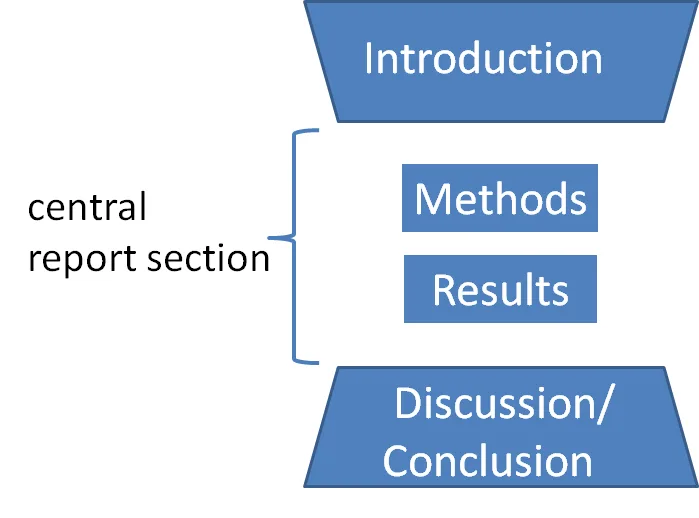
IMRaD は 1970 年代以降自然科学を中心に国際標準となった論文構成です。 現在は社会科学・医学・工学まで広く採用されています。
各セクションの役割と質問
| セクション | 答える質問 | 含める内容 |
|---|---|---|
| Introduction | What is the question? なぜこれを研究するか? | 背景・先行研究・research question・hypothesis |
| Methods | How did you study it? どう調べたか? | 対象・実験手順・分析方法 |
| Results | What did you find? 何がわかったか? | 数値・グラフ・表 (解釈はしない) |
| Discussion | What does it mean? それは何を意味するか? | 結果の解釈・先行研究との比較・限界・今後の展望 |
沙時の形
IMRaD は 「砂時の形」 に例えられます。
- Introduction = 上の広がり (一般から具体へ): 大きな背景 → 既存研究 → 自分の research question
- Methods + Results = 中央の細い部分 (具体的・限定的): 自分の実験と結果だけ
- Discussion = 下の広がり (具体から一般へ): 自分の結果 → 既存研究との比較 → 一般化・社会への含意
3. abstractの書き方
Abstract は論文の 要約 で、 本文の前に置かれます。 通常 150〜250 語、 1 段落。 読者が 「この論文を全部読むか」 を決める場所なので極めて重要です。
Abstract の標準構造 (BAMRC: Background / Aim / Methods / Results / Conclusion)
注意: CARS モデル (Swales 1990) は Abstract ではなく Introduction の構造モデルです。 Abstract の国際標準は BAMRC 形式 (背景 → 目的 → 方法 → 結果 → 結論) で、 構造化 abstract とも呼ばれます。
| 文番号 | 内容 | 例 (英語教育の論文) |
|---|---|---|
| 1〜2 文 | Background 背景 | English speaking proficiency among Japanese high school students remains low compared to other Asian countries. |
| 3 文 | Purpose目的 | This study investigates whether daily 5-minute shadowing exercises improve speaking fluency. |
| 4〜5 文 | Methods 方法 | A 12-week experiment was conducted with 60 second-year high school students, divided into a shadowing group (n=30) and a control group (n=30). |
| 6〜7 文 | Results 結果 | The shadowing group showed a 23% improvement in fluency scores, while the control group showed only 4%. The difference was statistically significant (p<0.01). |
| 8 文 | Conclusion結論 | These results suggest that even short, daily shadowing practice can substantially improve speaking fluency in Japanese high school learners. |
訳
日本の高校生の英語スピーキング力は他のアジア諸国に比べ低いままである。 本研究は毎日 5 分のシャドーイング練習が流暢さを向上させるかを調査する。 60 名の高校 2 年生を対象に 12 週間の実験を行い、 シャドーイング群 (30 名) と統制群 (30 名) に分けた。 シャドーイング群は流暢さスコアが 23% 向上した一方、 統制群は 4% に留まった。 その差は統計的に有意 (p<0.01) であった。 この結果は、 短い毎日のシャドーイング練習でも日本の高校生学習者の流暢さを大幅に改善しうることを示唆する。
ポイント: Abstract には 数値 を入れる (「improved fluency」 ではなく 「23% improvement」)。 また、 「結論を 1 文で」 が鉄則。
4. Introduction の書き方
論文の Introduction は CARS モデル (Create A Research Space) と呼ばれるフレームで書きます。
CARS の 3 ステップ
| Move | 内容 | 文例 |
|---|---|---|
| Move 1: Establish a territory | 研究領域の重要性を述べべる | English speaking proficiency is increasingly important in a globalized economy. |
| Move 2: Establish a niche | 既存研究の gap (空白) を指摘 | However, few studies have examined short-duration practice methods suitable for time-constrained Japanese students. |
| Move 3: Occupy the niche | 自分の研究がその gap を埋めると宣言 | This study fills this gap by testing the effectiveness of daily 5-minute shadowing exercises. |
大事: 研究論文で必ず必要なのが 「research gap」 (先行研究が答えていない問い) を示すこと。 「まだ誰もやっていない」 を言えれば、 「私の研究には価値がある」 と主張できます。
5. Methods の書き方
Methods は 「他の研究者が同じことを再現できるレベルの詳細」 で書くことが求められます。
含める 4 要素
| 要素 | 含める情報 |
|---|---|
| Participants (対象) | 人数・年齢・性別比・選抜基準・倫理同意 |
| Materials (材料) | 教材・機器・アンケート用紙・ソフトウェア |
| Procedure (手順) | いつ・どこで・どう行ったか (時系列) |
| Analysis (分析) | 統計手法・有意水準・使用ソフト |
時制と態
Methods は 過去形 + 受動態 が基本。
例: Participants were divided into two groups. The pre-test was administered in week 1, and the post-test was given in week 12.
訳: 参加者は 2 群に分けられた。 事前テストは 1 週目に、 事後テストは 12 週目に実施された。
6. Results の書き方
Results は 数値と事実だけ を述べべます。 解釈・意見は一切入れません (それは Discussion の仕事)。
含める表現
| 用途 | 表現 |
|---|---|
| 増加 | A increased significantly from X to Y. / There was a marked rise in B. |
| 減少 | C decreased by 15%. / D showed a sharp decline. |
| 比較 | Group A scored higher than Group B (M=82.3 vs M=68.1). |
| 統計有意 | The difference was statistically significant (t(58)=4.21, p<0.001). |
| 図表参照 | As shown in Figure 1, ... / Table 2 displays ... |
例文
The shadowing group's mean fluency score increased from 5.2 to 6.4 over 12 weeks, an improvement of 23%. The control group's score increased from 5.1 to 5.3, an improvement of only 4%. As shown in Figure 1, the gap between the two groups widened progressively from week 4 onwards. The difference at week 12 was statistically significant (p<0.01).
訳: シャドーイング群の平均流暢さスコアは 12 週で 5.2 から 6.4 へ 23% 上昇した。 統制群は 5.1 から 5.3 へわずか 4% の上昇に留まった。 図 1 の通り、 両群の差は 4 週目以降漸次拡大した。 12 週目の差は統計的に有意 (p<0.01) であった。
7. Discussion の書き方
Discussion は論文で最も 創造的 な部分。 「結果が何を意味するか」 を議論します。
Discussion の 5 要素
- Restate key findings — 結果の要点を再掲
- Compare with prior studies — 先行研究との一致・不一致
- Explain mechanism — なぜその結果になったかの解釈
- Acknowledge limitations — 研究の限界を正直に認める
- Suggest future directions — 今後の研究課題
例 (限界を認める部分)
However, this study has several limitations. First, the sample was limited to one high school in Tokyo, which may not represent rural learners. Second, the 12-week duration may be too short to detect long-term retention effects. Future studies should include diverse regions and longer follow-up periods.
訳: しかし、 本研究にはいくつかの限界がある。 第一に、 標本は東京の 1 校に限られ、 地方の学習者を代表しない可能性がある。 第二に、 12 週の期間は長期保持効果を検出するには短いかもしれない。 今後の研究では多様な地域と長い追跡期間を含めるべきである。
大事: 限界を認めることは 論文の弱点ではなく強味。 研究者としての誠実さを示し、 結論の範囲を適切に限定するための必須ステップです。
8. 時制の使い分け一覧
| セクション | 主な時制 | 例 |
|---|---|---|
| Abstract | 過去形 (研究) + 現在形 (一般化) | This study investigated ... The results suggest ... |
| Introduction | 現在形 (一般事実) + 現在完了 (先行研究) | English is important. Few studies have examined ... |
| Methods | 過去形 + 受動態 | Participants were tested ... |
| Results | 過去形 | The score increased ... |
| Discussion | 現在形 + 仮定法 | These results indicate ... It may suggest that ... |
次章予告: 第 3 章では論文で必須となる 引用・参考文献 のルール (APA / MLA / Chicago) と、 paraphraseと quote の使い分け、 plagiarism (剽窃) の回避を学びます。
まとめ — 論文構成 (IMRaD) を 3 行で
- 学術論文の国際標準構成 IMRaD は Introduction (背景・目的) / methodology (方法) / results (結果) / discussion (考察) の 4 部で、 essay と違い客観性・再現性が命。
- 巻頭には abstract (要旨) を置き研究全体を 200〜250 語で圧縮、 末尾には限界 (limitations) を認めることが弱点ではなく強みになる。
- 時制はセクション毎に使い分け、 Methods は過去形 + 受動態、 Results は過去形、 Discussion は現在形 + 仮定法 (may / might) で結論の範囲を適切に限定する。